Cost Guides · October 25, 2026 · 9 min read
Remodeling Costs in Palos Verdes Estates vs Rolling Hills
Compare renovation costs, permit timelines, and building requirements across Palos Verdes Estates, Rolling Hills, and Rancho Palos Verdes.
- 5.0 on Google reviews (opens in a new tab)
- Licensed & bonded · CSLB #1130785
- Office in Rolling Hills Estates
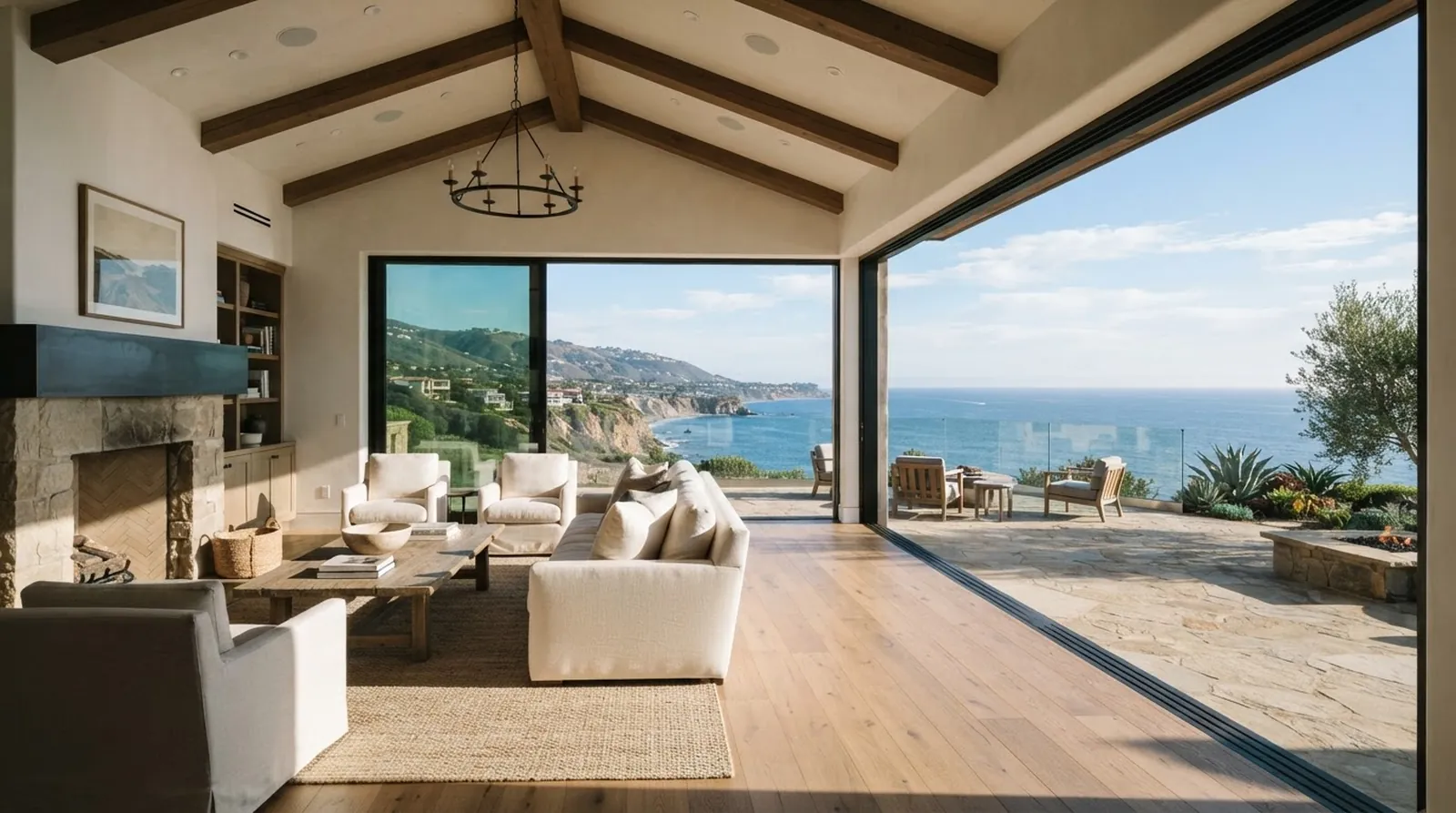
The Palos Verdes Peninsula offers a quality of light, space, and natural beauty that is hard to find anywhere else along the Southern California coast. From the deep, quiet canyons of Rolling Hills to the dramatic coastal bluffs of Palos Verdes Estates, homes here are defined by their intimate relationship to the surrounding landscape. When families decide to update these properties, their primary goal is usually to capture the cool ocean breezes, maximize the natural sunlight, and frame the sweeping views of the Pacific and the rugged terrain.
As a licensed California general contractor that builds, remodels and renovates on the Palos Verdes Peninsula, we frequently speak with homeowners deciding where to buy or how to plan their upcoming projects. One of the most common questions we hear is how the different cities on the hill compare when it comes to construction budgets and schedules. Every municipality has its own specific approach to design review, permitting, and site management, which can influence the overall trajectory of a major renovation.
Understanding these local nuances is the key to a smooth and predictable project. We always provide estimates shown as ranges with their assumptions to help homeowners set realistic expectations before they commit to a design. In this guide, we look closely at how financial planning and building timelines vary across Palos Verdes Estates, Rolling Hills, and Rancho Palos Verdes, helping you make informed decisions for your property.
The Architectural Character of the Peninsula
The three main cities on the hill each possess a distinct architectural heritage that heavily influences how you must approach a major renovation or new build. Palos Verdes Estates is famous for its early California Mediterranean and Spanish Colonial Revival homes. This specific aesthetic is guided by a strict local art jury that works diligently to preserve the original vision of the community. Authentic red clay tile roofs, smooth exterior stucco, and intricate wrought iron details are hallmarks of the area that homeowners are expected to maintain or incorporate into new designs.
Rolling Hills offers a completely different atmosphere, characterized by sprawling ranch-style estates set among mature eucalyptus trees and extensive equestrian trails. The community prioritizes a rural, low-profile aesthetic that blends naturally into the existing topography rather than standing out against it. Traditional white fences, wide porches, and single-story structures painted in muted, earthy tones dominate the landscape here. Any renovation must respect this equestrian heritage and adhere to the strict guidelines set forth by the community association to maintain the serene environment.
Rancho Palos Verdes provides slightly more architectural variety, stretching along the southern and western coastlines of the peninsula. Homes here range from classic mid-century modern designs featuring expansive glass walls to contemporary coastal retreats designed for indoor-outdoor living. While the design guidelines may feel slightly more flexible than the other two cities, there is still a very strong emphasis on protecting neighbor views, managing neighborhood compatibility, and minimizing the visual impact of large structures on the sensitive hillsides.
These architectural differences mean that a design that sails through the approval process in one city might face significant pushback in another. Homeowners must work closely with designers who understand the specific visual language and historical context of their exact address. Recognizing and respecting these local preferences early in the conceptual phase will save a considerable amount of time and frustration during the formal review process.
Comparing Renovation Costs Across the Hill
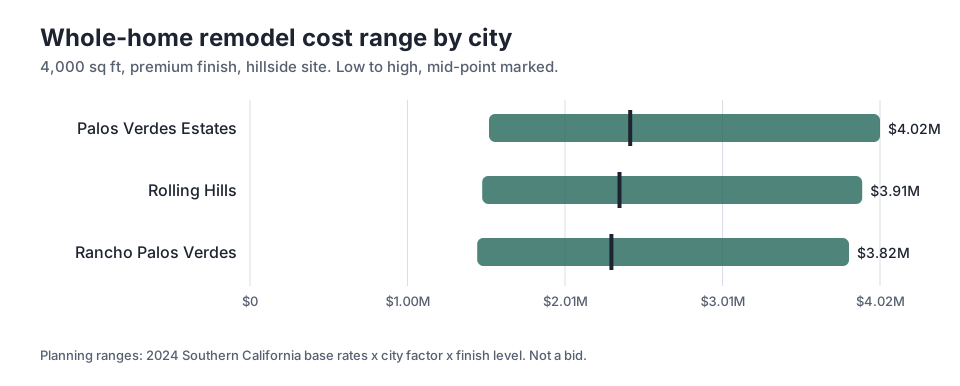
Budgeting for a major update requires looking at both the hard costs of construction materials and labor, as well as the soft costs associated with planning, engineering, and permits. To illustrate the subtle differences across the peninsula, the accompanying chart shows planning cost ranges for a 4,000 sq ft whole-home remodel with a premium finish. These figures are planning ranges, not a bid, but they serve as an excellent baseline for understanding how location impacts your initial financial projections.
In Palos Verdes Estates, a project of this size might see a mid-point of $2.43M. The same scope of work in Rolling Hills sits at a mid-point of $2.36M, while Rancho Palos Verdes comes in slightly lower with a mid-point of $2.31M. The differences in these figures often come down to variations in site access, local material requirements mandated by the city, and the specific administrative fees charged by each municipality to process and inspect the work.
High-end finishes, custom cabinetry, and complex structural changes will naturally push any project toward the upper end of the spectrum. For example, the high estimate for Palos Verdes Estates reaches $4.02M. Navigating steep, winding driveways, managing strictly enforced working hours, and sourcing specific architectural details approved by local juries all factor into these numbers. It is crucial to align your design aspirations with a realistic understanding of these local cost drivers.
Conversely, simpler updates that do not require extensive structural modifications or complex engineering might fall closer to the lower end of the scale. The low estimate for Rancho Palos Verdes is $1.45M, while Rolling Hills shows a low estimate of $1.48M. Regardless of where your project lands, establishing a clear scope of work and selecting materials early will help keep your budget within these anticipated ranges and prevent unexpected financial surprises.
How Permitting and Design Review Affect Timelines
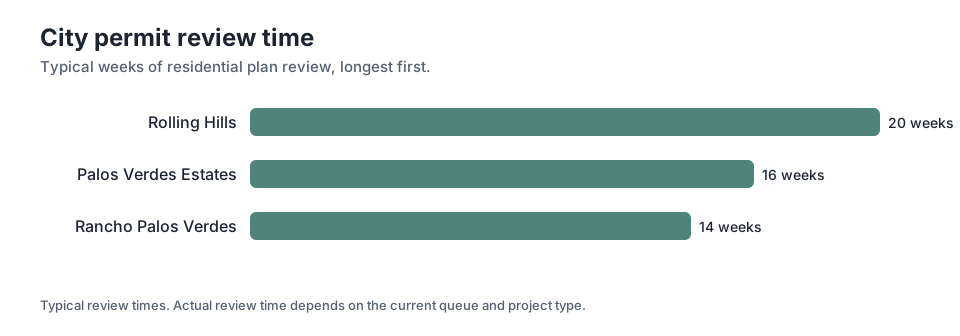
The time it takes to get a shovel in the ground can vary significantly depending on your specific address on the peninsula. Every city here has a thorough and deliberate review process designed to protect the visual character of the neighborhoods and ensure the stability of the land. The chart provided shows typical weeks of city plan review used in the timeline ranges, highlighting the administrative patience required before construction can begin.
Rolling Hills generally requires the longest approval period, averaging 20 weeks of city plan review. This extended timeframe is largely due to their comprehensive community association reviews, multiple committee meetings, and strict adherence to the traditional ranch-style aesthetic. The city wants to ensure that every new roofline, exterior paint color, and landscaping choice aligns perfectly with the rural nature of the community.
Palos Verdes Estates follows closely, requiring an average of 16 weeks of city plan review. This reflects the detailed scrutiny of their art jury and planning commission, which carefully evaluates how a proposed design fits within the historical context of the neighborhood. The process often involves physical story poles, neighbor notifications, and potential design revisions to meet the exacting standards of the community.
Rancho Palos Verdes tends to move slightly faster through the administrative phase, averaging 14 weeks of city plan review. However, this is still a substantial amount of time that homeowners must account for before any physical demolition or construction begins. Rushing the initial design phase often leads to incomplete submissions, which in turn causes further revisions and delays during the city review. A patient, methodical approach is always the most efficient path forward.
The Complete Schedule from Design to Move-In
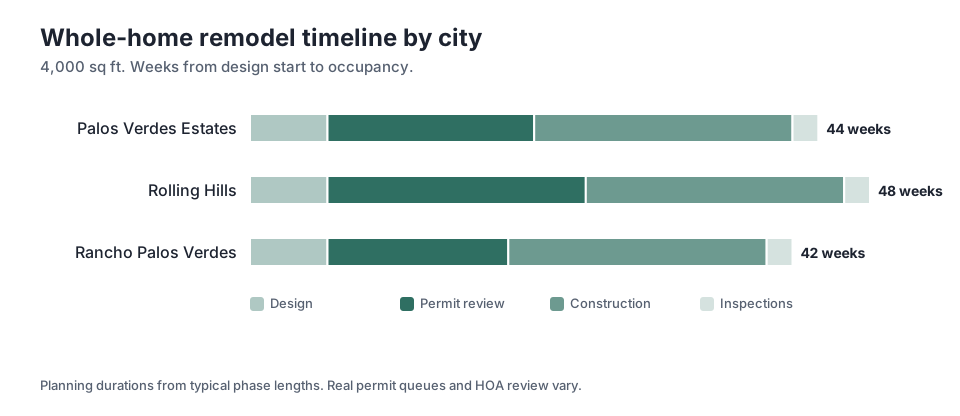
When planning your family's transition to a newly updated home, it is incredibly helpful to look at the entire schedule from the first architectural sketch to the final walk-through. The chart here breaks down the estimated weeks from design start to occupancy for a 4,000 sq ft whole-home remodel. Understanding this full lifecycle allows you to plan your living arrangements and financing with much greater accuracy.
In Rancho Palos Verdes, the total from design start to occupancy is 42 weeks. This timeline assumes a smooth progression through an initial design phase of 6 weeks, followed by the permit review period, a steady construction phase of 20 weeks, and final inspections taking 2 weeks. This represents a relatively efficient schedule for a major premium renovation, assuming no major weather delays or supply chain disruptions occur.
Palos Verdes Estates requires a slightly longer commitment from homeowners, where the total from design start to occupancy is 44 weeks. The actual physical building phase remains consistent, but the additional time spent in the art jury and planning stages extends the overall duration. Homeowners should use this planning period to finalize all interior selections, from plumbing fixtures to tile patterns, so that construction can proceed without interruption once permits are issued.
Rolling Hills projects demand the most patience, with a total from design start to occupancy of 48 weeks. While the construction phase itself is often similar across all three cities, the extensive administrative and preparatory phases dictate the final move-in date. Setting up comfortable temporary housing, arranging for storage, and staging your move around these extended schedules will significantly reduce stress and keep your family comfortable during the long transition.
Site Logistics and Material Handling
Building on the peninsula requires careful coordination of material deliveries and specialized trades. The winding, narrow roads of Palos Verdes Estates and the private, gated lanes of Rolling Hills mean that large commercial delivery trucks cannot always access a residential job site easily. Materials often need to be transferred to smaller vehicles or staged at an off-site location, which adds logistical steps and labor time to the daily construction process.
Working hours and noise ordinances are also strictly enforced to maintain the quiet, peaceful residential feel of these coastal communities. Contractors must sequence their trades efficiently to make the absolute most of the allowable noise hours each day. As a licensed California general contractor, we know that respecting these local rules is essential for maintaining good relationships with neighbors and keeping the project in good standing with city officials.
Soil conditions and lot slopes further complicate site management across the hill. Many properties in Rancho Palos Verdes and Palos Verdes Estates sit on steep hillsides that require specialized grading, deep caissons, and complex drainage solutions. Managing water runoff during construction and ensuring the long-term stability of the site are critical components that heavily influence both the engineering budget and the daily operations of the construction crew.
Even on the flatter, sprawling lots of Rolling Hills, site logistics require careful planning. Protecting mature trees, navigating around equestrian facilities, and managing dust control over large areas are all necessary steps. A well-organized job site not only ensures safety and compliance with local regulations but also sets the tone for the quality of the finishing work that follows.
Preparing for Your Peninsula Renovation
The most successful and enjoyable projects always start with a clear vision and a team that deeply understands the local landscape. Before you purchase a property or finalize your architectural plans, it is highly advisable to consult with professionals who know the specific, detailed requirements of the peninsula cities. They can help you identify potential challenges with lot coverage limits, height restrictions, and neighborhood compatibility before you spend money on unworkable designs.
We provide estimates shown as ranges with their assumptions because early planning requires a degree of flexibility. As your design solidifies, engineering is completed, and the city provides its formal feedback, those initial ranges will narrow into a fixed, actionable budget. Gathering inspiration, prioritizing your absolute must-haves, and understanding the financial and temporal commitments are the vital first steps toward creating a beautiful, highly functional home.
Whether you are drawn to the quiet equestrian charm of Rolling Hills, the historic, detailed elegance of Palos Verdes Estates, or the expansive, modern coastal views of Rancho Palos Verdes, updating a home here is a deeply rewarding endeavor. With the right preparation and a realistic understanding of the local processes, you can create a living space that perfectly celebrates the unique light, fresh air, and dramatic geography of this remarkable California coastline.
Key takeaways
- Renovation costs and timelines vary slightly depending on which peninsula city you call home, driven largely by local design review processes and site access.
- Rolling Hills typically requires the longest planning period, averaging 20 weeks of city plan review for a major remodel.
- A premium 4,000 sq ft whole-home remodel in Palos Verdes Estates has a mid-point planning estimate of $2.43M.
- Total project durations from design start to occupancy range from 42 weeks in Rancho Palos Verdes to 48 weeks in Rolling Hills.
- Engaging a local design and construction team early helps navigate strict art juries, neighborhood associations, and hillside building requirements.
Questions
Frequently asked questions
Do I need an architect who has worked in Palos Verdes Estates before?
While not strictly required, working with an architect familiar with the local art jury and planning commission can significantly streamline the design review process. They will already understand the preferred materials, roof pitches, and architectural styles that the city approves.
Why does plan review take so long in Rolling Hills?
Rolling Hills has a very specific rural, ranch-style aesthetic and a strict community association that reviews all exterior changes. This multi-layered review process ensures that new construction blends with the natural topography and maintains the equestrian character of the city.
Can I live in my home during a whole-home remodel?
For a major project involving structural changes, roof removal, or extensive utility work, it is usually necessary to move out. Living in a construction zone is stressful, and an unoccupied home allows the trades to work faster and safer.
How do hillside lots affect the cost of construction?
Sloped lots often require extensive soil testing, specialized foundation engineering, retaining walls, and complex drainage systems. Moving materials up or down a steep grade also adds labor time, which increases the overall cost compared to building on a flat lot.
Are these cost estimates fixed bids?
No, the figures provided are planning ranges used to help homeowners establish a realistic budget early in the process. A fixed bid can only be generated after the architectural plans are complete, engineering is finalized, and all material selections are made.