Remodeling Costs · November 6, 2026 · 8 min read
Cost of Premium vs. Luxury Finishes in Rancho Palos Verdes
Discover how upgrading to premium or luxury materials impacts the total cost of a whole-home remodel or addition in Rancho Palos Verdes.
- 5.0 on Google reviews (opens in a new tab)
- Licensed & bonded · CSLB #1130785
- Office in Rolling Hills Estates
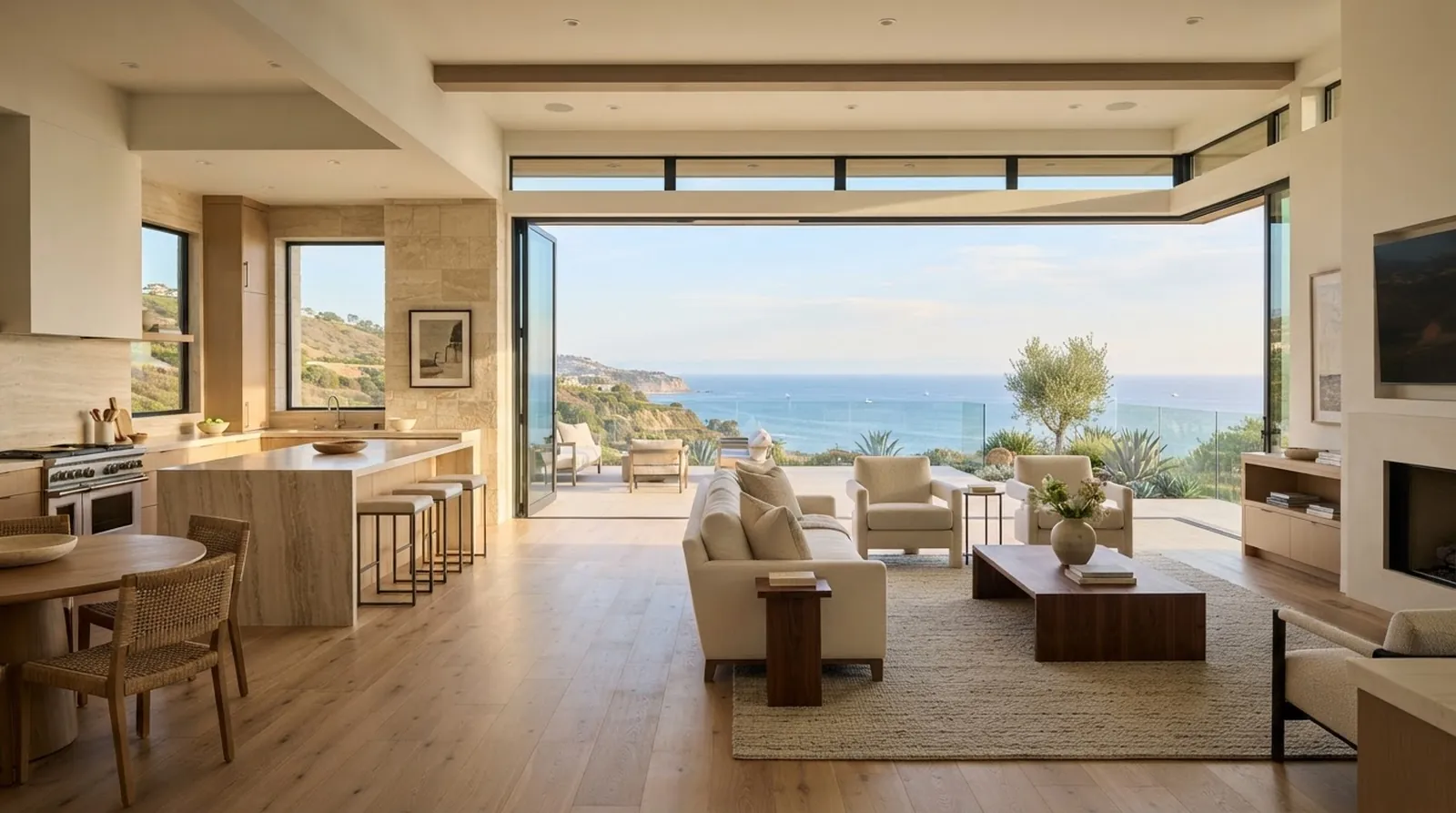
Living on the Palos Verdes Peninsula means waking up to the marine layer burning off the coastline and afternoon light filtering through the deep canyons. Homes here are built to capture those sweeping views and embrace the quiet, open spaces that define the hill. Buyers often weigh the Peninsula against pricier coastal markets, drawn by the larger lots and the distinctive character of the neighborhoods. When it comes time to update a property in Palos Verdes Estates, Rolling Hills or Rancho Palos Verdes, the choices you make inside should honor the natural beauty outside.
As a licensed California general contractor that builds, remodels and renovates on the Palos Verdes Peninsula, we often help homeowners navigate the financial side of these choices. The materials, fixtures and custom details you select form your finish level. This single decision shapes your budget more than almost any other factor in the planning phase. Whether you are planning a major remodel, an addition, an ADU or a completely new build, understanding how materials drive costs is essential.
Upgrading from standard to premium or luxury finishes changes the math on a major project significantly. We present all our estimates as ranges with their assumptions clearly stated so you can see exactly where your money goes. Understanding how these finish levels shift those ranges helps you plan a remodel that fits your vision, aligns with neighborhood standards, and respects your financial goals.
Defining the Tiers of Finish
A finish level represents the overall quality, rarity and customization of the visible materials in your home. It includes everything from the wide-plank flooring underfoot to the architectural lighting overhead. It also dictates the level of craftsmanship required to install those materials properly. A higher finish level always demands more time, more specialized labor, and more precise preparation from the framing stage onward.
Standard finishes rely on mass-produced materials that are readily available from major suppliers. Think prefabricated cabinetry in fixed sizes, ceramic or porcelain tile, and widely distributed plumbing fixtures. These materials are durable and functional, but they offer limited options for customization. You are generally choosing from a set menu of colors and sizes, which means the room must be designed around the materials rather than the materials being tailored to the room.
Premium finishes introduce a higher grade of materials and much more design flexibility. This tier often includes semi-custom cabinetry that fits your space perfectly, natural stone countertops, and high-quality hardwood flooring. Luxury finishes push the boundaries further with fully custom millwork, rare imported stone slabs, integrated smart home technology, and artisan details designed specifically for your home. At the luxury level, every element is considered and customized.
The Cost of a Complete Transformation
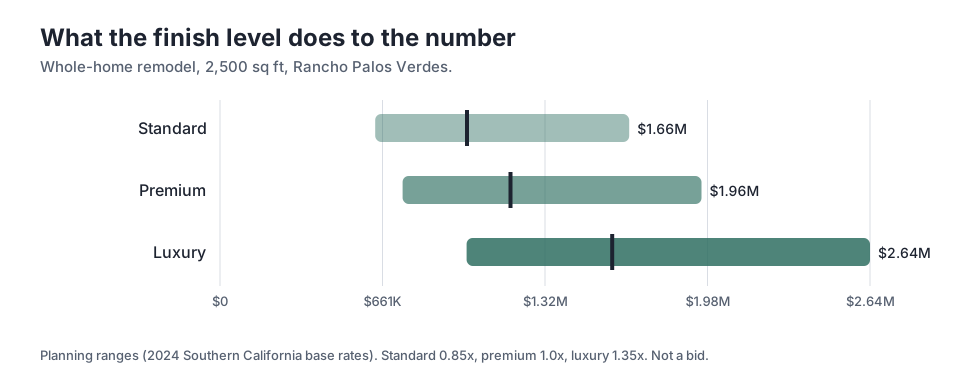
Looking at a complete 2,500 sq ft whole-home remodel in Rancho Palos Verdes helps illustrate how finish levels change the total investment. The chart provided outlines these planning ranges based on the finish tier. A premium finish serves as a solid baseline for many homes on the Peninsula, offering a balance of quality and customization that suits the local architecture. When planning a project of this scale, setting the right baseline ensures the final result feels appropriate for the neighborhood.
For a premium finish, the mid-point planning figure sits at $1,181,250 for the entire home. This assumes high-quality materials, solid wood interior doors, and professional-grade appliances. If you scale back to a standard finish, the multiplier drops to 0.85x. This adjustment brings the planning mid-point closer to $1.00M. The savings come from choosing mass-produced items over custom fabrications, which reduces both material costs and the time required for installation.
The difference between that standard tier and the premium tier often comes down to the tactile surfaces you interact with daily. Premium means moving from a basic quartz to a honed marble, or from standard aluminum windows to clad wood frames that perfectly frame the canyon views. The premium tier offers a level of refinement that aligns well with the expectations of buyers and homeowners in Rancho Palos Verdes. It provides the durability needed for coastal living while improving the everyday experience of the home.
What Drives the Luxury Multiplier
Stepping up to a luxury finish involves a significant shift in both material costs and labor requirements. The luxury multiplier sits at 1.35x compared to the premium baseline. For that same 2,500 sq ft home, the mid-point jumps to $1.59M. This tier is defined by exclusivity and absolute precision. Every element is tailored to the specific dimensions and aesthetic goals of the space, requiring a team of highly specialized craftspeople.
This $1.59M mid-point figure accounts for materials that require highly specialized handling and installation. Large-format porcelain slabs, custom-stained wide plank white oak flooring, and fully integrated lighting control systems demand highly skilled tradespeople. The installation often takes longer and requires precise coordination between the designer, the contractor, and the artisans crafting the materials. Mistakes at this level are costly, so the preparation and execution must be exact.
Luxury is also about what you do not see behind the walls. It includes advanced soundproofing between rooms, hidden mechanical systems that operate silently, and flush-set baseboards that require perfectly straight framing. These hidden details contribute heavily to the higher end of the luxury range, which can reach $2.64M for highly complex designs. The goal is a space that feels entirely cohesive, where every transition is planned and every material serves a specific architectural purpose.
Breaking Down Costs by Room
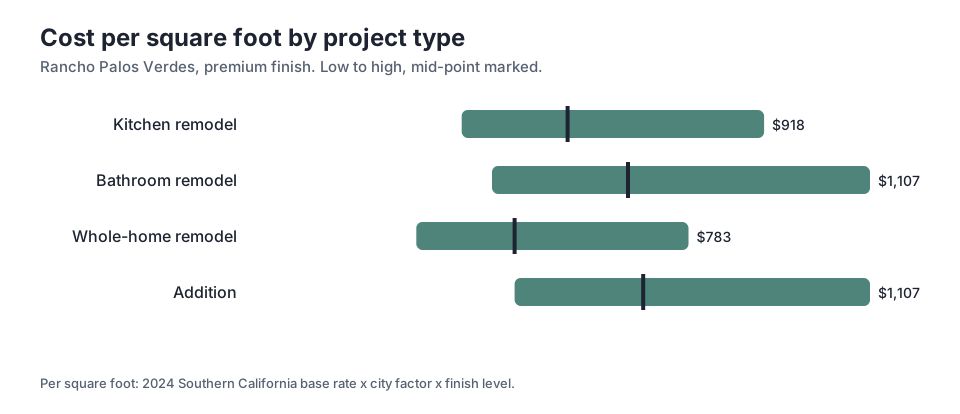
Whole-home figures provide a broad view, but remodeling costs are rarely distributed evenly across the house. Wet rooms like kitchens and bathrooms demand a much higher concentration of plumbing, electrical work, and expensive finishes. The second chart breaks down these planning ranges by project type using a premium finish baseline. This helps you understand where your budget is actually going room by room, allowing you to prioritize the spaces that matter most to your family.
A kitchen remodel is often the most complex single room in the house. With a premium finish, the mid-point sits at $567 per square foot. This accounts for custom cabinet boxes, high-end stone fabrication, and professional appliance packages. The density of trades required in a kitchen means that a significant portion of your budget is concentrated in a relatively small footprint.
Bathrooms are smaller but even more dense with utilities and finishes. The mid-point for a bathroom remodel is $675 per square foot. Waterproofing systems, custom glass enclosures, and intricate tile layouts drive this cost. In smaller bathrooms, the fixed costs of plumbing and fixtures are spread over fewer feet, which naturally drives up the cost per square foot. The precision required for custom tile work and frameless glass installation also adds to the labor requirements.
Expanding Your Footprint
Adding square footage to your home introduces a different set of financial variables. Unlike a remodel that works within existing walls, an addition requires new foundation work, framing, roofing, and exterior finishes. These structural requirements establish a higher baseline cost before you even select your interior materials. To put this in perspective, the whole-home remodel mid-point sits at $472 per square foot, while building outward requires a larger initial investment.
For a premium finish addition, the mid-point planning figure is $702 per square foot. The difference between the remodel mid-point and the addition mid-point reflects the cost of building the new shell from the ground up. You are paying to excavate the site, pour a new foundation, tie the new structure into the existing roofline, match exterior details like stucco or siding, and extend the home's mechanical systems to condition the new space.
When planning an addition, the finish level still plays a major role, but the structural costs are fixed. If you are adding a new primary suite, you might choose luxury finishes for the bathroom while keeping the bedroom finishes at a premium level to manage the overall budget. Understanding these per-square-foot differences helps you decide whether it makes more sense to reconfigure your existing footprint or build outward into your lot.
Mixing Finish Levels Strategically
You do not have to commit to a single finish level for every room in your house. Many homeowners in Palos Verdes Estates and Rolling Hills mix tiers to allocate their budget where it matters most. This approach requires careful planning to ensure the transitions between rooms feel natural and intentional. A sudden drop in quality from one room to the next can disrupt the flow of the home.
A common strategy is to use luxury finishes in the primary suite and the main kitchen, where you spend the most time and interact with the surfaces daily. You might then apply premium finishes to guest bathrooms, secondary bedrooms, and home offices. Standard finishes can be reserved for utility spaces, mudrooms, laundry rooms, or children's play areas where durability is the primary concern.
The key to mixing levels is consistency in the architectural details. If you use custom solid wood doors in the main living areas, switching to hollow core doors in the hallway will feel jarring. Maintaining a consistent quality in doors, hardware, and baseboards allows you to vary the cost of tile, countertops, and cabinetry without compromising the overall feel of the home.
Planning Your Project Timeline and Budget
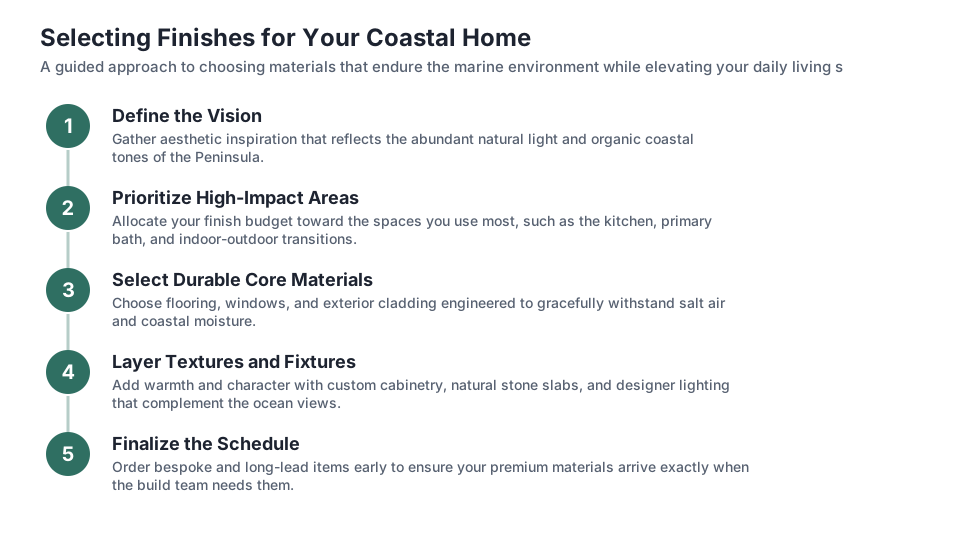
Upgrading materials affects more than just the final invoice. Premium and luxury finishes often come with longer lead times. Custom cabinetry can take months to build, and rare stone slabs might need to be shipped from overseas. These lead times must be factored into your project schedule early in the planning phase to avoid delays once construction begins.
As a licensed general contractor that builds, remodels and renovates on the Palos Verdes Peninsula, we emphasize the importance of making material selections before demolition begins. Changing your mind from a premium tile to a luxury slab halfway through the project can cause cascading delays and unexpected costs. The framing might need to be adjusted, or the plumbing rough-in might need to change to accommodate a different fixture.
We always show our estimates as ranges with their assumptions clearly defined. This transparency helps you understand exactly how your material choices impact the bottom line. By defining your finish levels early and working closely with your architect and builder, you can move forward with a clear vision and a realistic budget for your Peninsula home.
Key takeaways
- Upgrading from standard to premium or luxury finishes dictates your total budget more than almost any other planning decision.
- A premium finish serves as a reliable baseline for Rancho Palos Verdes homes, offering high-quality materials and professional-grade appliances.
- Luxury finishes introduce a 1.35x multiplier over premium costs, driven by custom fabrication, rare materials, and highly specialized labor.
- Wet rooms like kitchens and bathrooms cost significantly more per square foot due to the density of plumbing, electrical, and tile work.
- Mixing finish levels strategically allows you to invest heavily in primary spaces while managing costs in secondary rooms.
Questions
Frequently asked questions
What is the main difference between premium and luxury finishes?
Premium finishes use high-quality, semi-custom materials that are readily available, while luxury finishes rely on fully custom, often imported materials that require specialized artisans to install.
Why do bathroom remodels cost more per square foot than a whole-home remodel?
Bathrooms pack a high concentration of plumbing, electrical work, waterproofing, and expensive tile into a very small footprint. In a whole-home remodel, these dense costs are averaged out by less expensive square footage in bedrooms and hallways.
Can I use standard finishes in a Rancho Palos Verdes home?
Yes, standard finishes are often used strategically in secondary spaces like utility rooms, children's bathrooms, or mudrooms to manage the overall budget while reserving premium or luxury materials for the main living areas.
How do finish levels affect the timeline of a remodel?
Higher finish levels generally require longer lead times for ordering materials and longer installation times. Custom cabinetry and imported stone slabs must be ordered well in advance to avoid delaying the construction schedule.
Does an addition cost more per square foot than remodeling existing space?
Yes. An addition requires new foundation work, framing, roofing, and exterior finishing before any interior materials are installed. Remodeling an existing space utilizes the structure already in place, which lowers the baseline cost.
Keep reading
Related guides
More from the same places and topics.
Timeline to Build an ADU in Rancho Palos Verdes
Planning a guest house? Discover a realistic, phase-by-phase timeline for designing, permitting, and building an ADU in Rancho Palos Verdes.
How much does a home addition cost in Rancho Palos Verdes?
A comprehensive guide to the costs and timelines of building a home addition in Rancho Palos Verdes, including finish levels and permitting.
Rancho Palos Verdes Bathroom Remodel Costs
Discover the true cost of a primary bathroom remodel in Rancho Palos Verdes, including finish levels, city timelines, and local design considerations.