Reference33°46′ N · 118°22′ W
The ground under the Peninsula, in plain language.
Most homeowners never need this page. It's here for the ones who want to understand what they're building on — how the Peninsula was formed, what the soil is like, and where drainage and foundation choices actually matter.
How it formed
A headland lifted out of the sea, one terrace at a time.
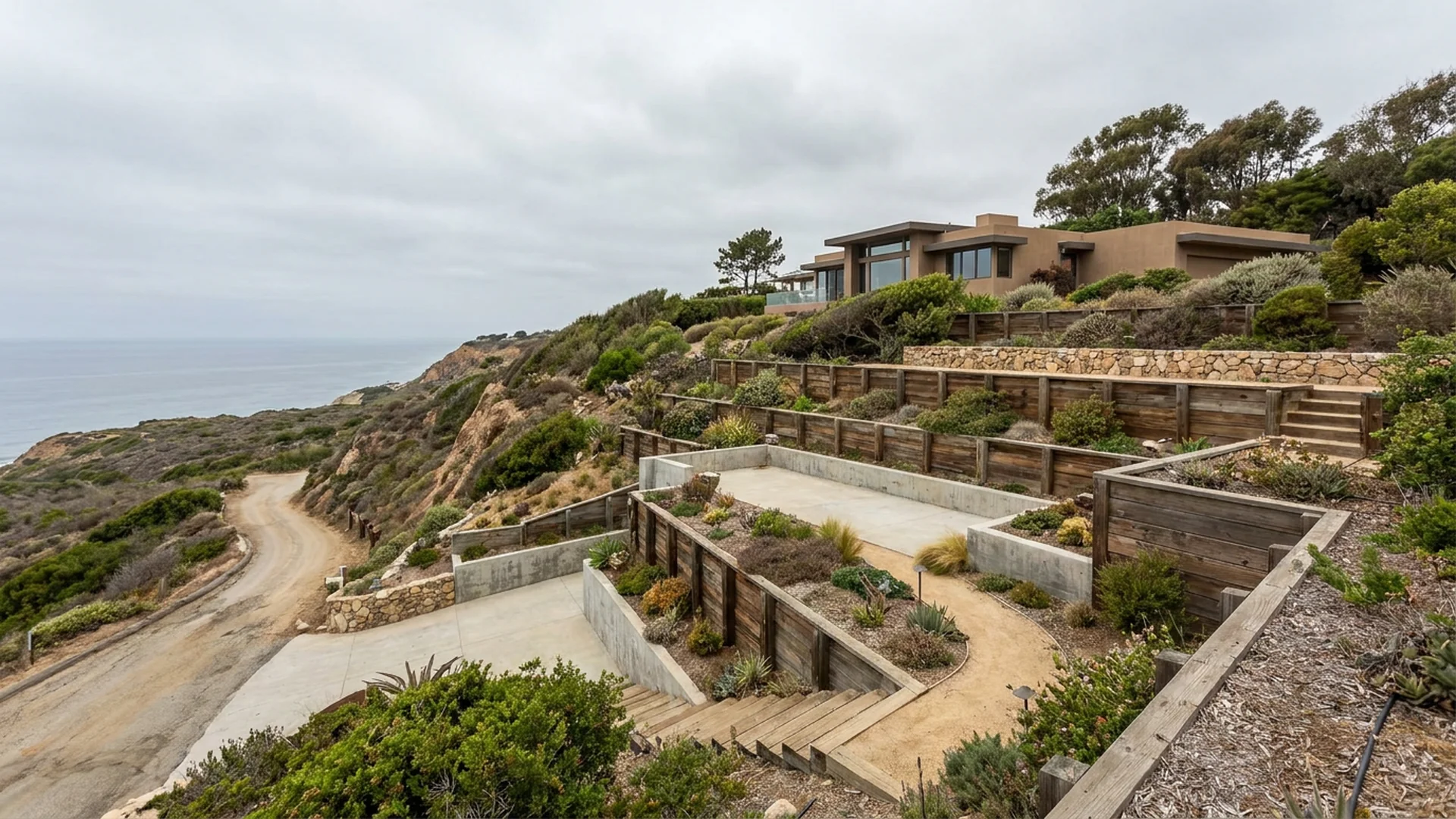
The Peninsula is an uplifted block of seafloor. Thirteen marine terraces step up from the water to the top of San Pedro Hill — each one an old shoreline, raised and left behind. That is why the roads switchback, why so many lots sit on a natural shelf with the view already framed, and why the landform reads the way the Amalfi Coast does. It is also why every parcel here is a little different from its neighbour.
- Marine terracesMost Peninsula lots sit on a natural bench — flat building area with grade falling away to the view
- Palos Verdes stoneThe pale, shelly limestone in older garden walls across PVE came out of the Peninsula itself
- Canyons and drainageThe natural drainage lines are the canyons, which is why they stayed green and undeveloped
- Marine climateA mild, humid envelope that is easy on people and demanding on exterior materials
Common questions
What homeowners ask us about the ground
Does the geology change how a house gets built here?
In normal ways, yes. A soils report is part of any permitted structural scope in Los Angeles County, and on a sloped lot it informs the foundation type and the drainage design. This is routine engineering, done on essentially every Peninsula project, and it is priced into the numbers our cost estimator returns.
Where do I find the public information for my parcel?
Los Angeles County and the California Geological Survey both publish parcel-level mapping, and each Peninsula city keeps its own records. Your title report and any prior permit history for the address are usually the fastest starting point. We can point you to the right source for your street.
Is drainage something I should think about?
Worth doing well on any hillside property anywhere. Roof water and hardscape runoff should be collected and taken to the street or an approved outlet rather than allowed to sheet across a slope. It is inexpensive to do properly during construction and tedious to retrofit later.
Should any of this worry me?
No. People have been building beautiful homes on this Peninsula for a century, and the engineering involved is well understood and thoroughly regulated. Understanding your site is part of building well anywhere — here it just comes with a better view.
Next
Now the more interesting part.
Site knowledge is the boring half. The reason people build on the Peninsula is the light, the water, and the way a house here can open completely to both.